

Mandala
78 colorings

Dive into our magnificent collection of free printable Nature and Mandala coloring pages! Whether you are fascinated by the beauty of trees, flowers, or breathtaking landscapes, these coloring pages are perfect for all ages and tastes.
78 colorings

78 colorings

67 colorings

61 colorings

70 colorings

45 colorings

75 colorings

45 colorings

51 colorings

40 colorings

63 colorings

65 colorings

54 colorings

30 colorings

36 colorings

62 colorings

52 colorings

40 colorings

30 colorings

43 colorings

27 colorings

33 colorings
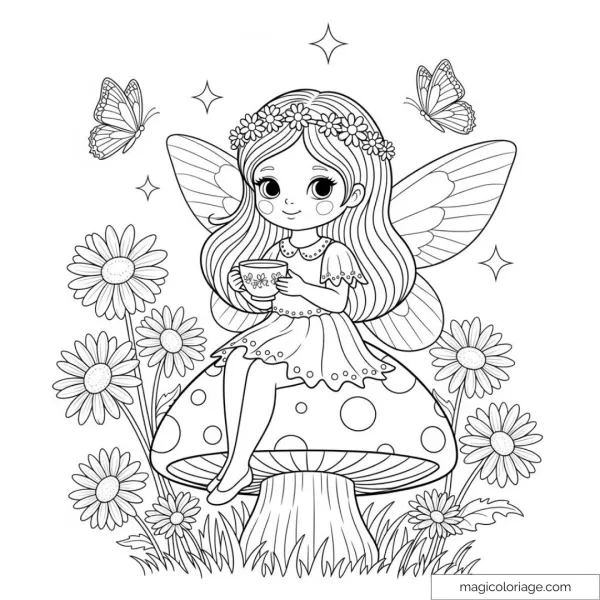
46 colorings

30 colorings
On the one hand, flora and fauna invite us to marvel at the diversity of life; on the other, the geometric patterns of mandalas offer a meditative interlude. By combining these two dimensions, we obtain an ideal creative space to relax and reconnect with ourselves.
Coloring nature scenes, whether forests, flowers or landscapes, allows you to appreciate the play of colors while stimulating artistic sensitivity. Mandalas, on the other hand, are characterized by concentric and symmetrical shapes, conducive to concentration and relaxation. By combining these two approaches, you can design plant mandalas, animal mandalas or simply let your imagination run wild by slipping natural elements into geometric patterns.
Trying to faithfully reproduce the colors of nature can be an excellent exercise in observation, but nothing prevents you from going into completely invented palettes. Colored pencils, with their adjustable shades, lend themselves well to this game of nuances. Simply press more or less hard or superimpose several tones to give depth to the petals of a flower or the foliage of a tree.
For mandalas, taking the time to color each section thoughtfully helps you enter a state of concentration that is close to meditation. You can decide on a predefined set of colors to create an overall harmony, or draw your pencils as inspiration strikes. Some people like a gradient that goes from light to intense, while others prefer alternating between warm and cool colors. The goal is to find a rhythm and balance that provides a sense of calm, far from external concerns.
If you choose to combine natural elements and symmetrical shapes, you can imagine a mandala pattern where leaves, flowers, or even silhouettes of stylized animals slip in. Each circle or segment then becomes an opportunity to play with contrasts: delicate greens alongside an earthy brown, a pastel pink suddenly interrupted by a bright yellow. This hybrid composition marries the organic delicacy of nature with the perfect rigor of geometric figures, creating a work that is both relaxing and full of energy.
Mandalas have their origins in several spiritual traditions, particularly in Asia, where they often symbolize cosmic organization or inner quest. The radial shapes mimic the perfection of nature, like a sunflower or a snowflake whose patterns stretch out in a regular manner. In a way, mandalas are simply an echo of the symmetry and beauty that we observe in life.
In Buddhist practice, a sand mandala is shaped over time and then destroyed to remind us of the impermanence of things. This idea is close to nature, in a perpetual cycle of birth, growth, and renewal. Similarly, floral mandalas, made with real petals, celebrate fragility and ephemerality. Coloring these types of patterns, whether in an abstract or figurative version, can strengthen our awareness of the beauty that nature offers and the importance of preserving it.
1) Do I have to respect the perfect symmetry of a mandala?
This is not mandatory. Some mandalas are very strict, others more free. If you prefer an asymmetrical style, you are free to modify the pattern or interpret it creatively.
2) How to manage the multiple details of a natural mandala (leaves, petals, etc.)?
Take your time. You can color area by area, varying the intensity of the shades to emphasize certain elements. Don't hesitate to take a break as soon as you feel visual fatigue, especially if the drawing is very fine.
3) Can children enjoy this type of coloring?
Yes, absolutely. They are sometimes intrigued by repetitive shapes and like to have fun with bright colors. For younger children, there are mandalas with simpler patterns, with less detail.
4) Are the markers suitable for the precision required for a mandala?
Yes, as long as you choose fine-tipped markers if the drawing has many tiny sections. You can also opt for gel pens or brush markers, depending on the desired effect.
5) Where can I find stylized animals for a “nature mandala” effect?
Go to the Animals section , which offers various designs. You can complete the existing outlines with arabesques or geometric shapes for a mandala effect.
If you'd like to continue the adventure in a different style, the Kawaii & Manga category might appeal to you with its gentleness and adorable characters. Fans of epic storylines will enjoy exploring Fantasy and Myth , where dragons and unicorns lend themselves to more vibrant coloring. To add a touch of learning or play, the Educational section offers drawings that combine fun and knowledge.
The encounter between nature and mandalas offers a creative space conducive to relaxation and contemplation. Whether you opt for flowery landscapes, delicate animals or detailed geometric patterns, the main thing is to let yourself be carried away by the rhythm of color. Each stroke of the pencil, each nuance added becomes a moment to breathe and appreciate the beauty that surrounds us, real or imagined.
Feel free to vary the techniques, from pencil to watercolor, to explore all the facets of these nature-inspired drawings. The goal is to find your own balance, to savor every moment spent coloring and, why not, to awaken a new sensitivity to the richness of the living world. Enjoy relaxing and happy coloring!

Join us in seconds
We have sent an activation link to:
-
Click the button in the email to activate your account.
Link valid during 15:00
Check your spam folder if you don't see the email.


